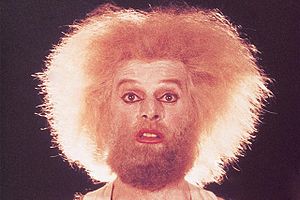
As stated in the masthead, it’s meant to “provide a platform for the dissemination of new research and ideas pertaining to anthropological approaches to the study of paranormal beliefs, associated practices and phenomena.”
Though the focus is anthropological, they branch into psychology, parapsychology, sociology, folklore and history.
Articles include titles like ‘The Therapeutic, Ethical and Relational Dynamics of Mediumship and Psychic Consultations‘, ‘Ethnographic Encounters with the Paranormal,’ and ‘Clairvoyance, Class & Convention‘. The theme of April’s issue is ‘PSI & the Psychedelic Experience.’
It’s great. And despite some occasionally wordy titles, very readable.
Scott Jones is a writer and filmmaker, currently working with Kripal on a film adaptation of Authors of the Impossible. They discuss their film in the first podcast.
I’ve listened to three of the five so far, and am looking forward to the rest. All have been fascinating.
If you’re interested in that place where science and the mystic meet, you’ll really enjoy these talks. I hope they record more.
______________________________________________________________________________
Here’s a short clip from the film. It’s part of an interview with comic book writer Doug Moench where he describes an extremely frightening synchronistic event from his own life.
The history of Tarot cards has been filled with mystery. Stories of Egyptians, Gypsies and Atlantis have figured prominently.
But most such tales are nothing more than fiction.
In fact, the Visconti-Sforza deck is the oldest known Tarot deck to exist, and it’s from 15th Century Italy.
There’s nothing Atlantian, Egyptian or Gypsy about it. And from all accounts, it was originally used for nothing more spiritual than a good game of cards.
How then has the Tarot deck come to be such a staple of the occult?
When did it change from being used for games like Tarocchi, to being considered a doorway to the spirit world, or even a window into our unconscious?
Everything is in this book. Incredibly thorough descriptions of different decks, western occult theory, and the histories of many magical societies and their colourful members.
Organizations like The Brotherhood of Luxor, The Theosophical Society, The Golden Dawn and the Holy Order of MANS. People like Etteilla, Èliphas Levi, Aleister Crowley, Arthur Waite, Ouspensky and Eden Gray.
These are just a few names from a long and convoluted history full of revelations, betrayals, chicanery and some serious pursuit of spiritual awakening.
It’s an incredible story. And perhaps a little surprising for anyone under the impression that seeking spiritual enlightenment is the same thing as finding it.
This book was first published in 2002 and doesn’t look at many decks past 1970, but it’s fabulous.
If you’re interested in knowing how today’s Tarot came to be, check it out.
Each chapter is a different classic tale accompanied by the magical illustrations of Argentinean illustrator, Federico Ulises Parolo.
Editor and publisher Jorian Polis Schutz’s narrative makes it easy to see how these old stories are very much alive in our present-day world.
Like Tarot cards, the Greek myths touch on all the big themes of the human experience. Our costumes may change, but we keep living out these stories again and again.
You can download the tales of Phaethon and Medusa for a little taste of the fun.
And needless to say, the illustrations in the book would make fantastic Tarot cards.
It was first published back in the late 90’s, but it’s as interesting now as it would have been then. As you might expect, Carl Jung’s concept of synchronicity is thoroughly explained.
That in itself would make it a worthy read for any Tarot worker. But one of the things I especially like about this book, is that the authors have connected synchronicity to the archetype of the Trickster.
They describe him most often as Hermes, but he reminds me an awful lot of a combination between the Tarot’s Fool and Magician.
Like Tarot readings, not only do synchronistic events seem to happen at the border between the conscious and unconscious worlds, Hermes, or the Fool/Magician, is our guide through these experiences.
Though the authors don’t focus on Tarot symbolism, they have included an appendix specifically discussing PSI and synchronicity.
The book maintains that consciousness is a key component to life in the universe. And according to Lanza, without it, there would be no universe.
It’s a fascinating book for so many reasons. But from a Tarot reader’s perspective, I was particularly interested in the chapters on the very flexible nature of time and space.
Heavy, mind spinning stuff, but a surprisingly entertaining read.
Mistlberger’s perspective on these three 20th century masters is sympathetic, yet not overly romantic.
He sees them all as humans, but humans who made enormous contributions to spiritual understanding, and perhaps even awakening, in the West.
He examines their philosophies, their following, their personal lives and their legacies. And describes it all in the voice of someone who’s been there as both a teacher, and a disciple.
These three books might not have a lot in common, but they’ve all been getting me thinking. Maybe you’d like them too.
There’s an interesting online display from the Whipple Library at Cambridge University. Adventures in the unknown: mesmerism, spiritualism and the supernatural.
The general public wasn’t alone in their fascination with Spiritualism and occult phenomena in the mid-19th century through the beginning of the 20th.
During the ‘Age of Science’, many scientists were too.
This Whipple special collection includes books describing everything from ancient astrology to new age magic and ghost hunting.
And there’s a book by Raphael called, A Manual of Astrology or the Book of the Stars: being the art of foretelling future events, by the influences of heavenly bodies in a manner unattempted by any former author and divested of the superstitions of the Dark Ages.
Quite a title, I’d like to read it. And I love the picture inside of Mercury delivering King’s George IV’s horoscope.
If you think you’re alone in believing there might be something to this tarot, astrology and psychic stuff, you’re wrong.
According to sociologists Christopher Bader, F. Carson Mencken and Joseph Baker, two-thirds of Americans have paranormal beliefs.
To write their new book, Paranormal America, the researchers camped out in haunted houses, joined hunts for Big Foot and dug through the 2005 Baylor Religion Survey to explore who it is that believes in the paranormal, and how it shapes their lives.
What they found was that the average American holds two paranormal beliefs. By that they mean a belief in ghosts, Bigfoot, UFOs, psychic phenomena, astrology, or the ability of mediums to speak with the dead.
The research suggests that people with no religious beliefs are in the same camp as religious fundamentalists in rejecting the paranormal. For different reasons I expect.
And those who are interested in religion, but don’t attend regular services, have a greater likelihood of believing.
Of the believers, men are more into hunting down Bigfoot or searching the sky for UFOs. Women are attracted to tarot, astrology and psychics.
According to the researchers, for women the paranormal tends to be an opportunity to improve themselves. For men, it’s a chance to capture something, to prove it’s real.
Unmarried people are more likely to have had paranormal experiences than married folk.
And Republicans are less interested in the whole business than are their Democratic and Independent brethren.
Overall, the study finds that the level of conventionality in one’s lifestyle and an individual’s stake in conformity are strong predictors of paranormal beliefs.
Given that two-thirds of Americans are believing in the paranormal, America might not be as conventional as it thinks.
“Statistically, those who report a paranormal belief are not the oddballs,” write Bader, Mencken and Baker. According to them, whether it’s real or not, “the paranormal is the normal.”
I haven’t read the book yet, but I’m looking forward to it.
It’s part two of Daniel Pinchbeck’s conversation with the celebrated Tarot master and film-maker. In it, Jodorowski discusses archetypes, religion and the unconscious forces behind creation.
Jodorowsky as El Topo
He talks about Buddhism, Tarot, Kabbala and mudras. He also tells us why Tipheret is his favourite Sephira and the Tarot of Marseille his favourite deck.
This video was directed and edited by Bradley Smith. It was filmed on an evening celebrating the release of Jodorowsky’s latest book, Psychomagic.