If you’re a music loving Tarot reader you might want to try out this idea by James Truong – an iPod Tarot Deck.
The complete instructions can be found at WikiHow, but the idea is pretty simple if you already know how to create a playlist. And it doesn’t have to be on an iPod – any digital media player will work.
Just sit down with your music library and choose songs that you think best represent the particular cards in the deck and collect them all in a playlist marked ‘Tarot’.
For instance, you might choose something like Bob Dylan’s Mr. Tambourine Man for the Fool, a classic version of Ave Maria for the High Priestess, or the Stone’s Sympathy for the Devil for, of course, the Devil.
Though those choices are pretty obvious, to find all the cards takes some time. I’d personally start with just the Majors and work from there.
When you get all you cards/songs chosen, then you can finally start to play. All you have to do is ask your question and press ‘shuffle’. The song that first plays (or maybe even the first two or three) is the answer to your query.
I love it. I want to go make one now.
For an example of a baroque and classical Tarot playlist, visit knowyourtarot.com.
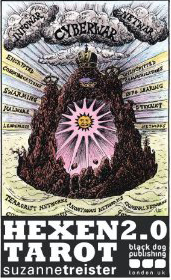
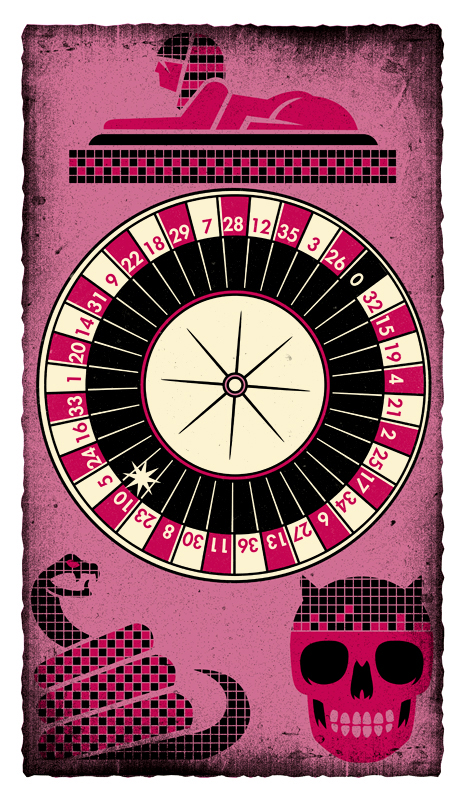
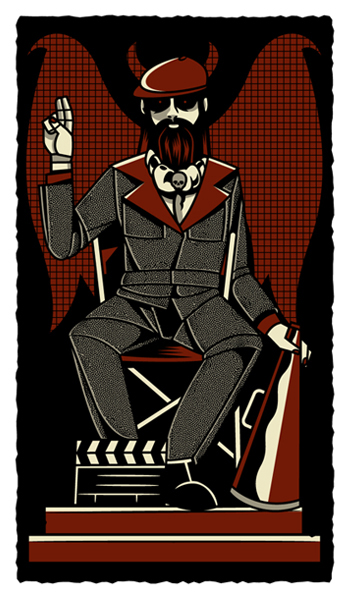
One of the most interesting Tarot decks I got last year was the Hexen 2.0 by artist Suzanne Treister.
It’s a conspiracy laden, politically radical, cybernetic, psychedelic, utopian/dystopian, science- and history-minded set of cards that surprisingly enough, gives really good readings.
I wouldn’t recommend it for romantic questions, but it offers some very astute observations when asked about politics, society and western culture in general.
This year, I’m happy to report (via Phantasmaphile), that they’ve made their way to North America and are on display until February 23rd at P.P.O.W. in New York City.
I don’t think I’ll be able to make the show, but I’d certainly be there if I were in the NYC area. It looks fascinating. I wish it would come to Toronto.
Jeremy Blattner, with artist Simon Haiduk is putting together a beautiful full-colour oracle deck meant to raise your vibrations and help you embrace your inner power.
Their IndieGoGo project page describes the cards in more detail and tells you how you can get a deck of your own. Check it out if you’d like to learn more.
You might also like to take a look at the Quantum Cards – Digital Painting Timelapse below to see Haiduk actually create one of the cards.
After googling the phrase, I discovered that there are a lot of them out there (though not in card form), and that they’re used by people to come up with tavern-based storylines and characters, mostly for gaming.
Hannah Lipsky developed her Tavern Cards for just that purpose, though she mentions that they can also be used as a regular playing card deck.
When I saw them though, my first thought was that they would be great for divination. They’ve got colouful and descriptive imagery, key words, and four suits.
What more would you need for a good reading? They’re almost a Tarot deck, just without any Majors.
Visit Lipsky’s project page to learn more. You might even want to support the deck and get a copy for yourself.
Based on the enchanting tales of Lewis Carroll, not only is this deck adorable, it could definitely be used for readings.
The Court cards area all beautifully illustrated and the pip cards have enough character in them to tell a story of their own.
The card I like best though, is the Joker, who in this case is the Cheshire Cat.
Take a look at the Kickstarter Project video below. In it Tyree tells us more about the project, and actually creates the Cheshire Cat card before our very eyes.
The Rider-Waite Smith deck is probably the most popular Tarot deck in the world. Though painted by Pamela Colman Smith, Arthur E. Waite is credited with most of the deck’s design. But is that fair?
In Mary K. Greer’s upcoming webinar, she’ll be investigating whether or not Waite should be given as much credit for the deck as he actually gets.
Though the famed occultist clearly had a specific plan for the Major Arcana, what about the images in the Minor cards? They were some of the first Tarot Minors to be illustrated with actual scenes in them rather than simply suit symbols.
How did they come about and whose idea were they? Pamela Colman Smith’s?
The two-part class will be offered through Global Spiritual Studies and will be live January 24th and 31st at 9:00 pm ET (6:00 pm PT). It will be available afterwards on download and DVD.
Unfortunately, the 3rd Edition of the Mountain Dream Tarot is already sold out, but you still might want to take a look at this video Bea Nettles made about her deck a few years back.